Colombo

GMT +5 1/2 hours

Srilanka rupees

Colombo 10 1/2 hours

Sinhalese, Tamil and English are also widely spoken,

Anuradhapura: The Ancient Capital of Sri Lanka
Anuradhapura, one of Sri Lanka’s ancient capitals, is a UNESCO World Heritage Site that offers a deep dive into the island’s rich Buddhist heritage. Founded in the 4th century BCE, this sacred city is home to some of the world’s oldest and most revered religious monuments. The towering Ruwanwelisaya Stupa, the sacred Bodhi Tree, and a collection of ancient temples and reservoirs make Anuradhapura a significant pilgrimage site for Buddhists worldwide. As you walk through its massive ruins, the grandeur of Sri Lanka’s ancient civilization unfolds before you.
Anuradhapura was the capital of Sri Lanka for over 1,300 years, making it one of the longest-serving capitals in the world. It was a political, cultural, and religious hub, and during its prime, the city was renowned for its advanced hydraulic engineering, including the construction of large reservoirs and irrigation systems. The city was also the seat of Buddhism in Sri Lanka, with many temples and monasteries built during its reign.
The architecture of Anuradhapura showcases the great mastery of Sri Lankan engineers and craftsmen. The massive stupas like the Ruwanwelisaya, the Abhayagiri Vihara, and the Jetavanaramaya are some of the tallest and most impressive structures in the ancient world. The city is also famous for its intricate carvings, stone pillars, and the sacred Bodhi tree a living symbol of the Buddha's enlightenment.

Mihintale: The Birthplace of Buddhism in Sri Lanka
Mihintale, located just outside Anuradhapura, is one of Sri Lanka’s most sacred places, known as the cradle of Buddhism in the country. According to tradition, it was here that Mahinda, a Buddhist monk from India, first introduced Buddhism to King Devanampiyatissa in the 3rd century BCE. The site is marked by a collection of ancient stupas, caves, and monasteries, set on a hilltop offering panoramic views of the surrounding countryside. Mihintale remains a pilgrimage site, drawing thousands of devotees every year.
Mihintale is considered the birthplace of Sri Lankan Buddhism, with the arrival of Mahinda from India marking the start of the island’s long and enduring Buddhist tradition. King Devanampiyatissa’s conversion to Buddhism helped shape Sri Lanka’s cultural and religious identity. The site is also home to the first monastery built in Sri Lanka, which became a significant center of learning and spiritual practice.
Mihintale is known for its ancient stone structures, including the famous Mihintale steps, which lead to the summit where the Mahinda Linga stupa stands. The site is dotted with ancient stupas, rock inscriptions, and caves used by monks. The architecture is simple but profound, with large stone stairways and monastic buildings carved into the rock, offering a connection between nature, spirituality, and history.
Polonnaruwa: The Medieval Capital
Polonnaruwa, another UNESCO World Heritage Site, was the capital of Sri Lanka from the 11th to the 13th century. It is a city brimming with history, boasting a blend of ancient Buddhist temples, royal palaces, and vast irrigation systems. Highlights include the Gal Vihara, a stunning collection of rock-carved Buddha statues, and the Parakrama Samudra, a vast reservoir that remains a testament to the island’s advanced engineering. Polonnaruwa’s well-preserved ruins reflect the peak of ancient Sri Lankan civilization.
Polonnaruwa rose to prominence after the fall of Anuradhapura, and it became the center of political power, culture, and religion under King Parakramabahu I. The city’s architecture and irrigation works were a marvel of the time, showcasing the island's high level of sophistication in water management and urban planning. The city also played a key role in the spread of Buddhism, with many temples and monasteries built during this period.
The architecture of Polonnaruwa is defined by grand stone structures, including the Royal Palace, the Parakrama Samudra reservoir, and the Gal Vihara rock temple. The Gal Vihara, in particular, is renowned for its four massive Buddha statues carved into granite rock, offering a unique glimpse into the artistry of the era. The extensive ruins of royal gardens, libraries, and monasteries also add to the city’s historical grandeur.
Wilpattu National Park: A Wilderness of History and Nature
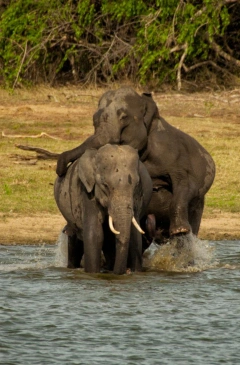
Wilpattu National Park, located in the North Central Province, is Sri Lanka’s largest national park, renowned for its diverse wildlife and pristine natural beauty. The park is also home to historical sites, including ancient Buddhist ruins and monasteries. The park’s name, meaning "Willus" (natural lakes), refers to the numerous water-filled depressions that dot the landscape. Visitors can explore the park’s dense forests, grasslands, and lakes while observing Sri Lanka’s rich wildlife, including leopards, elephants, and various bird species.
Wilpattu has a long history that stretches back to ancient times, with evidence of human settlements and religious sites dating back to the 3rd century BCE. The park is home to several Buddhist archaeological sites, including ancient stupas and monasteries. The region’s rich wildlife has also played a vital role in the island’s cultural heritage, with many species considered sacred in local traditions.
Though Wilpattu’s main draw is its wildlife, its historical sites include the remains of ancient Buddhist temples and stupas. These ruins, often hidden in the jungle, reflect the island’s deep spiritual and cultural connection to nature. The park’s untouched natural beauty, combined with its historical significance, makes it a unique and fascinating place to explore.
Gal Viharaya: The Timeless Rock Shrine
Gal Viharaya in Polonnaruwa is a 12th-century rock temple built by King Parakramabahu I. Renowned for its four massive Buddha statues carved into a single granite rock face, it stands as a masterpiece of ancient Sri Lankan art and spirituality.
A center for Buddhist learning, Gal Viharaya reflects the religious and artistic legacy of the Polonnaruwa Kingdom. Its inscriptions and carvings highlight medieval craftsmanship and royal patronage, serving as a meditation retreat for monks.
The temple features four Buddha statues: a seated figure in meditation, a smaller seated Buddha in a rock niche, a standing Buddha with crossed arms, and a reclining Buddha symbolizing Parinirvana. Intricate carvings and natural rock integration showcase Sri Lanka’s artistic excellence.